
Categories
Top products
Vote
Diamond Nails News

01/02/2026
12:40
5 Signs You Applied the Base Too Thick and That’s Why the Polygel Shifts
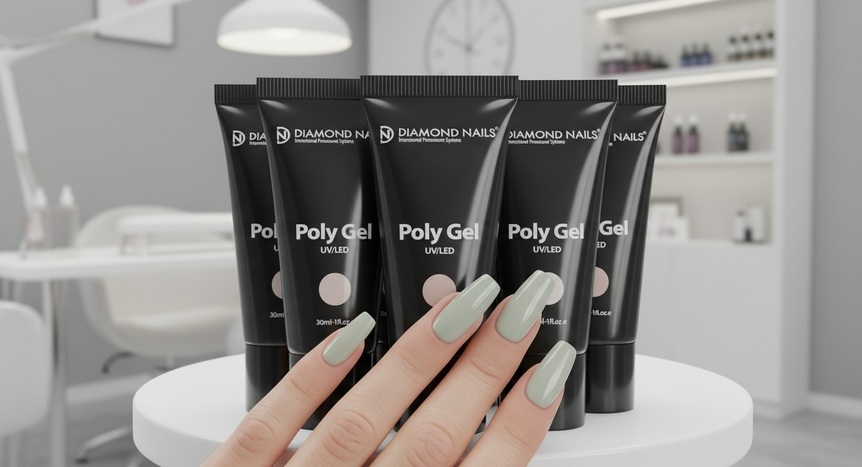
When working with polygel, the shape and durability of the set are largely determined by the very first layer. If the material starts moving out of place during shaping and becomes difficult to control, one of the most common reasons is applying the base layer too thick. In this article, we’ll show you 5 clear signs that help you recognize when the base layer is too thick, along with the typical factors that can further intensify the problem.
Diamond Nails Polygel Base – in brief
Diamond Nails Polygel Base is a base layer specifically designed for polygel techniques. Its role is to create a strong adhesion bridge between the natural nail and the building material.
It is not a leveling product and should not be used to correct surface imperfections.
Why is a base applied too thick a problem?
When applied in a thick layer, the base remains softer and more flexible, meaning the polygel is placed on an unstable surface.
There is also a higher risk of incomplete curing, as light may not penetrate evenly through the entire thickness of the layer.
If there is too much polygel liquid on the brush, this effect becomes even more noticeable.
1) The material flows already during shaping
The most obvious sign: the polygel doesn’t stay where you place it, but starts shifting sideways or moving toward the cuticle area.
Possible reasons:
- The base was applied in a layer that is too thick
- The base is being used to build height or level the nail
- Always work with a thin, even base layer
2) You can’t maintain sharp shapes and constantly need corrections
If the C-curve and surface don’t stay defined and it feels like the base layer is slightly moving underneath, the base is most likely too thick or uneven.
Typical causes:
- The base layer is bumpy or uneven
- Too much material has accumulated near the cuticle or sidewalls
3) The base feels too flexible after curing
If the base doesn’t feel firm and stable after curing but instead feels slightly soft, this is often related to layer thickness and curing issues.
Possible causes:
- Thick base layers are more prone to under-curing
- A more flexible base may be acceptable on short nails, but on longer enhancements it can reduce overall stability
4) The material is hard to control with the brush
If during shaping you feel like the polygel is controlling you rather than the other way around, excessive polygel liquid is often the cause.
Possible reasons:
- Too much polygel liquid on the brush
- A thick base creates an unstable surface, and the liquid exaggerates the issue
Simple solution:
If reducing the amount of polygel liquid immediately makes the material easier to control, the issue is not a product defect but excessive liquid usage.
5) Lifting or air pockets appear at the edges within a few days
If lifting or air bubbles appear around the edges of the nail after a few days, an overly thick base layer is often part of the problem—but not the only possible cause.
Most common reasons:
- Product touches the skin around the cuticle
- Dust or moisture remains after nail preparation
- Nail prep is not suited to the client’s nail type
Conclusion
Polygel is easiest to control and most durable when the base layer is thin, even, and fully cured. A base applied too thick creates an unstable surface, reduces control during shaping, and increases the likelihood of errors. The best results are achieved by using only the minimum amount of base necessary for adhesion and always building the shape with the construction material itself. If you’re looking for a reliable system for polygel techniques, explore the Diamond Nails range.